
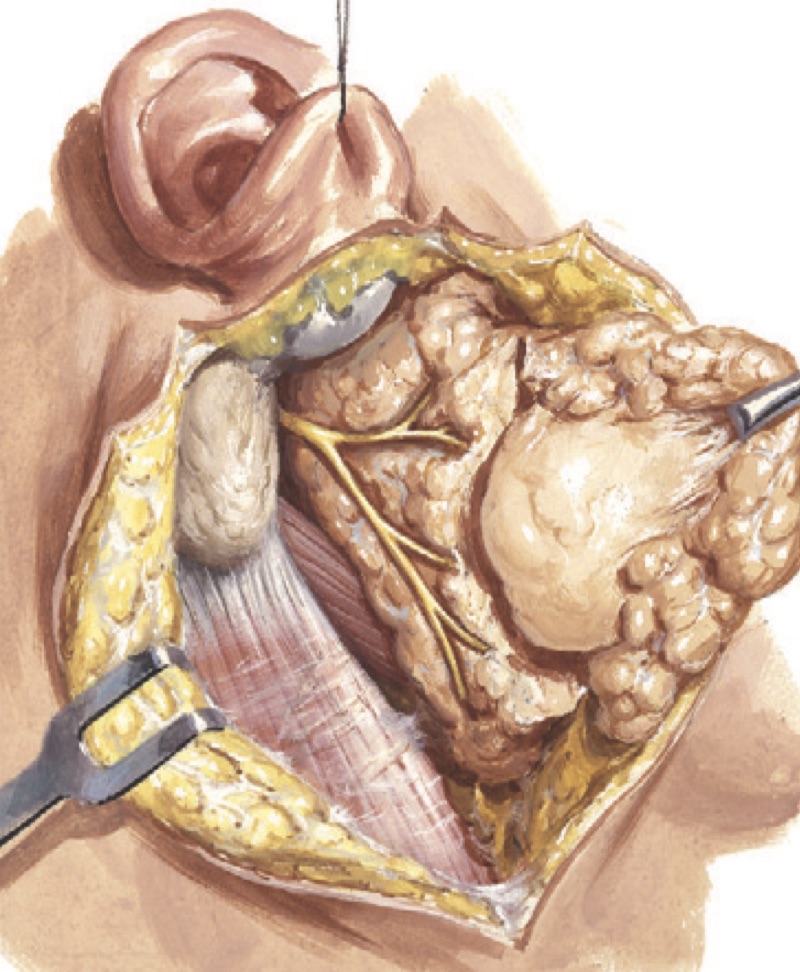
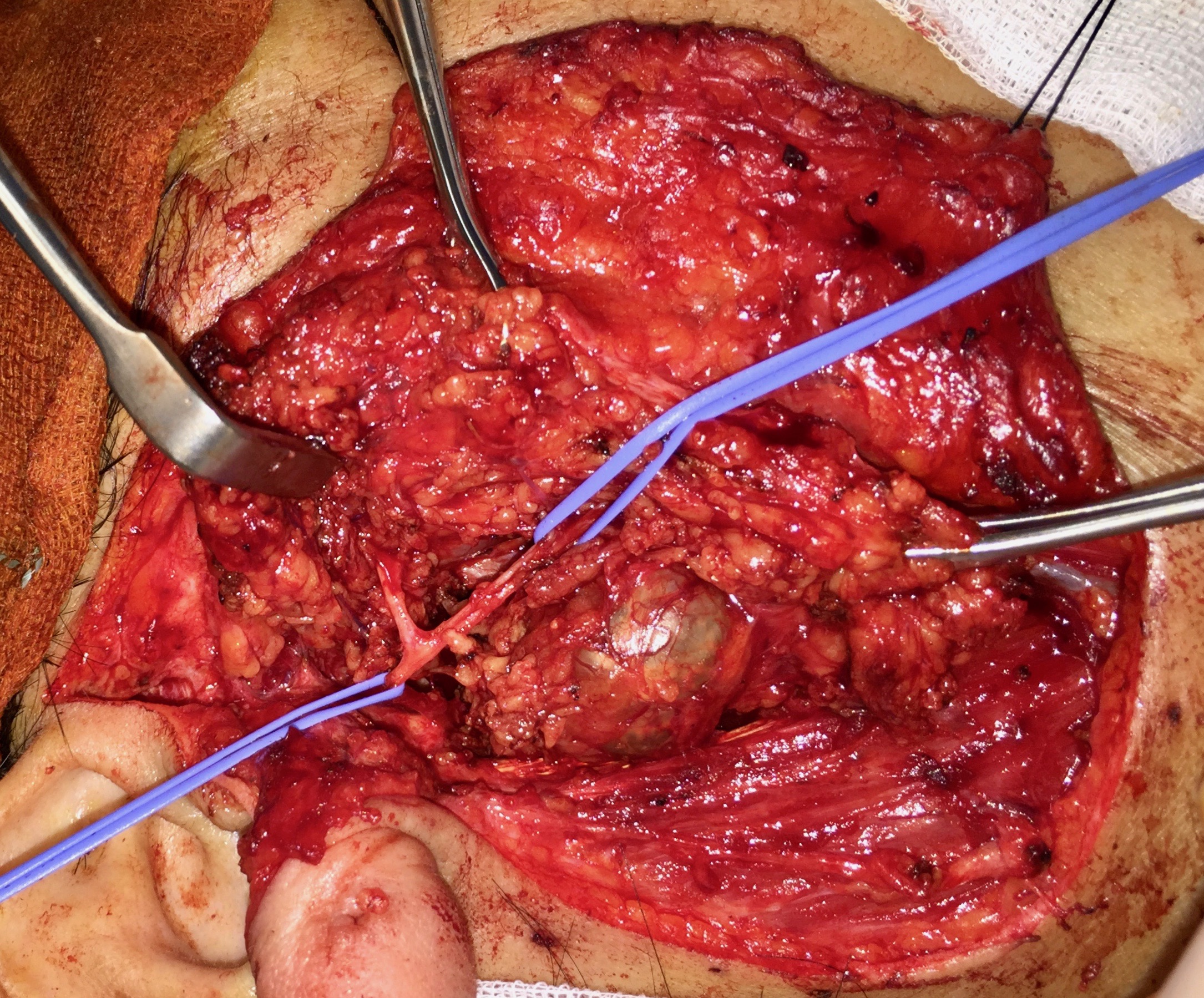
In this case, the incision is placed just in front of the ear within a skin crease to make it less visible. It then follows the curve of the earlobe backward before returning forward along a skin crease in the neck. After dissecting and lifting the skin, the facial nerve is carefully identified.
Then, in the case of a benign tumor, it will be carefully separated from the branches of the facial nerve, with a healthy margin of the parotid gland. Regarding malignant tumors, everything depends on the radiology findings and the type of cancer. The tumor will be removed, but with a wider margin of tissue since cancers spread differently. Depending on the pattern of spread, it may be necessary to remove affected lymph nodes in the neck (neck dissection). Depending on the type of cancer, postoperative radiotherapy may be required. The use of an electronic facial nerve monitor allows its integrity to be checked throughout the surgical procedure.
Dr. Yousefpour systematically uses this device in all parotid surgeries. At the end of the procedure, he will fill the hollow left by the surgical removal of the gland and tumor by transferring a muscle flap (a segment of an adjacent muscle) from the sternocleidomastoid muscle. To prevent the development of a hematoma (blood clot), a surgical drain will be placed before the skin is closed and sutured.
Depending on the extent of the surgery, the hospital stay will be 1 to 2 days. It usually takes about one week (sometimes a few days more) to recover from the effects of surgery and anesthesia. During your follow-up consultation one week after the procedure, Dr. Yousefpour will remove the stitches and/or staples and explain the final diagnosis. You should protect your scar from direct sun exposure and ideally apply a high-protection sunscreen.