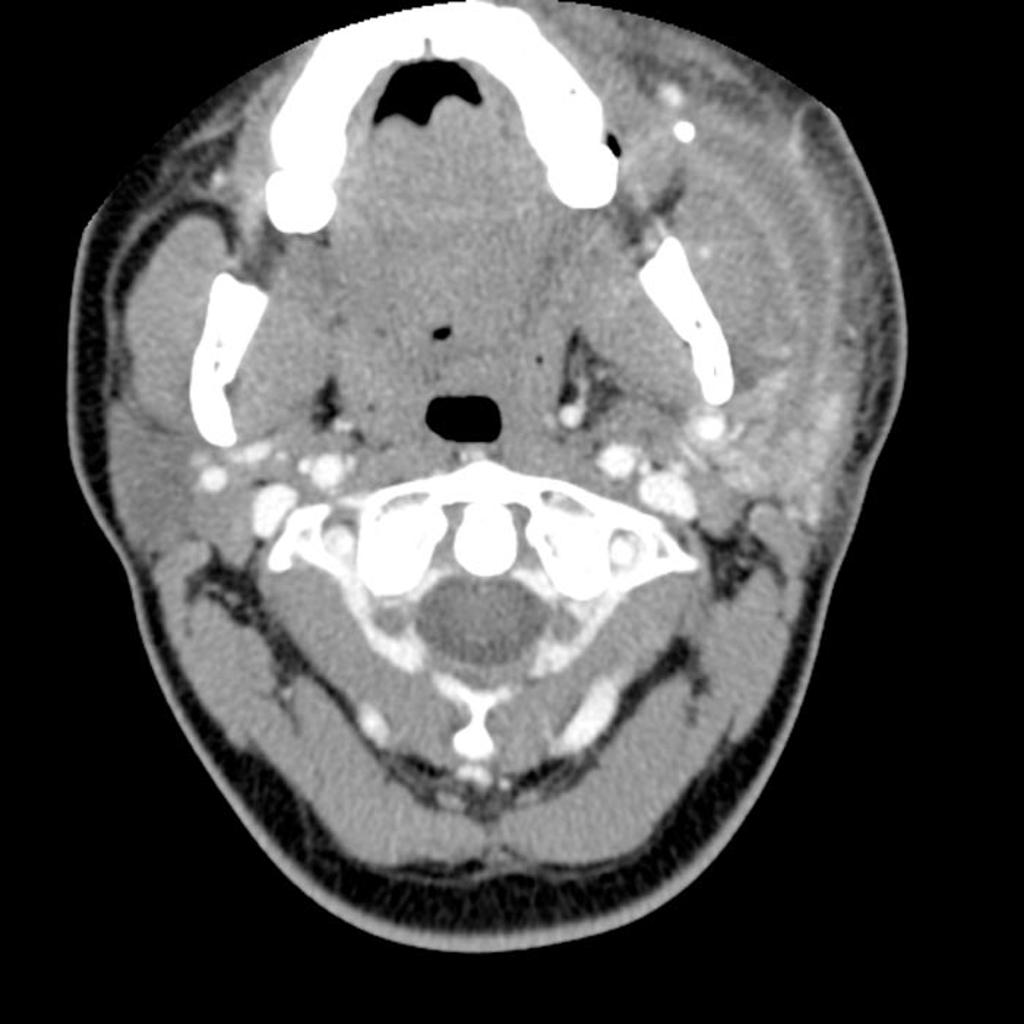
We have three main salivary glands on each side of the face: the parotid gland, the submandibular gland, and the sublingual gland. There are also several hundred tiny accessory salivary glands located beneath the mucosal lining of the mouth, including the palate, lips, and pharynx.
The parotid gland is the largest of the salivary glands. It is located below and in front of the ear, in the angle of the jaw. Its role, like that of the other salivary glands, is to produce and secrete saliva, thereby facilitating chewing and swallowing.
Unfortunately, in cases of recurrent infections or tumors, it is sometimes necessary to remove it. Contrary to what most people believe, the loss of one parotid gland does not have a major impact on overall saliva production, as this loss is compensated for by the other salivary glands.