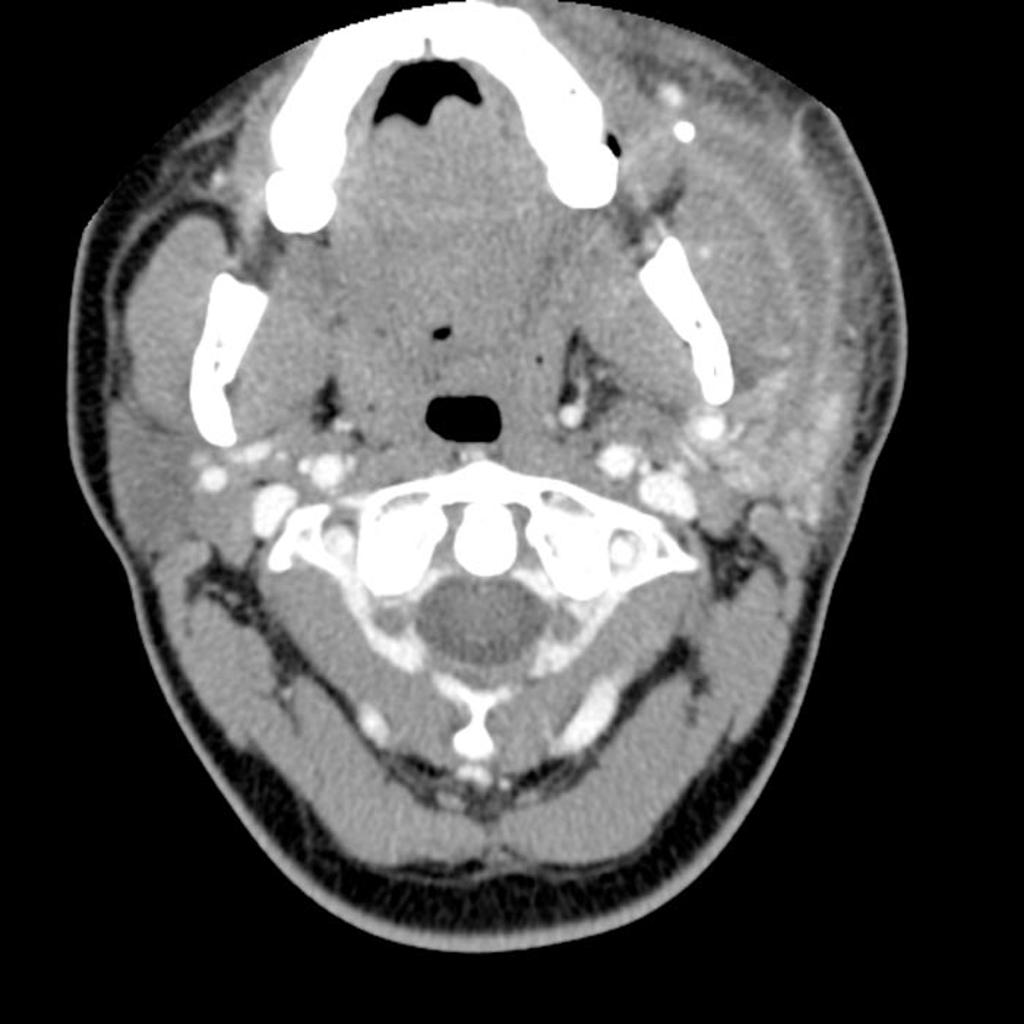
An obstruction of the excretory ducts can occur due to the presence of salivary stones (lithiasis), which causes narrowing or even complete blockage of the duct. In some cases, the obstruction may be related to a mucous plug or micro-lithiasis forming a “sand-like” deposit, leading to ductal obstruction.
This condition typically causes pain in the area of the affected salivary gland (parotid or submandibular), described as salivary colic, as well as swelling of the gland during meals. Treatment of salivary stones is based on sialendoscopy, an endoscopic technique that allows visualization of the inside of the salivary gland ducts. Sialendoscopy makes it possible to identify the cause of the duct obstruction and also to treat it by removing the stone or dilating the duct, provided that the stone is accessible with the sialendoscope.
Rarely, in cases of recurrent infections, the gland becomes destroyed and turns into a site of microbial proliferation that is difficult to eradicate without resorting to surgical removal.