
Sensory disturbances – your earlobe and the surrounding skin will be numb; this may improve over time, however, full recovery of sensation is often impossible
Facial nerve paralysis – even though we will almost always try to preserve the facial nerve (the nerve that moves the facial muscles), there is a certain risk (10–20%) of injury to the facial nerve during the procedure. This is generally temporary due to stretching and bruising and should resolve. However, in about 2–3% of patients, this paralysis will be permanent or recovery will be partial.
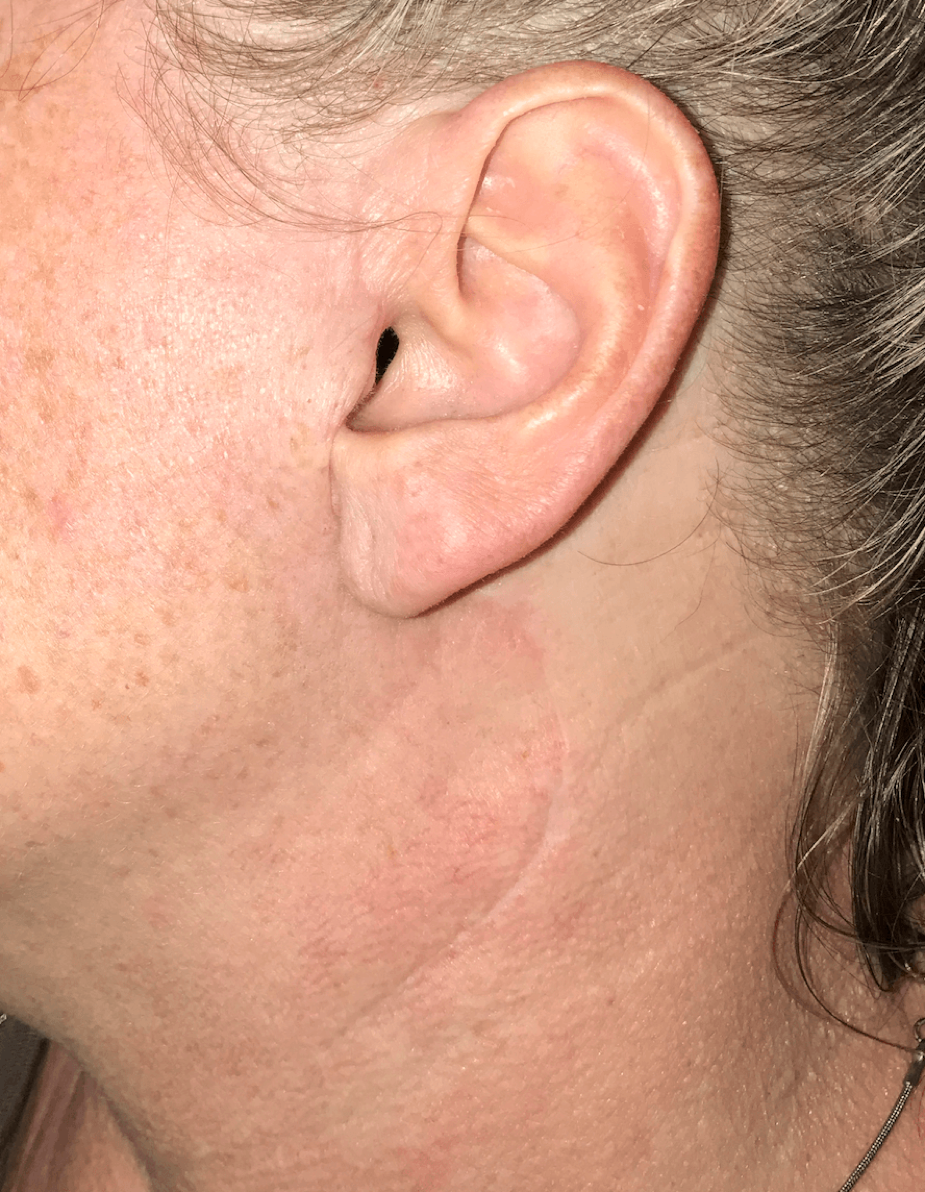
Scar – you will have a scar; however, it will tend to fade over the next two to three months. After two months, you should massage the scar with a small amount of moisturizing cream two or three times a day to help the healing process. Some people develop a hypertrophic scar or even keloids (raised scars); this is mainly due to their skin type. This cannot be predicted before surgery and, if it occurs, it can be treated afterward. After the procedure, a slight depression of the cheek in front of and below the ear may also be noticed. Certain reconstruction techniques can be used to correct this. It can also be treated later, for example with lipofilling.
Hematoma / Hemorrhage / Bruising – To reduce the likelihood of developing a hematoma (blood clot), a drain will be placed in your wound during the procedure. However, the appearance of some bruising around the face and neck area will be unavoidable. You should rest/sleep in a seated position in your bed for a few nights to improve drainage and reduce swelling.
Infection – is a complication that can occur after any surgical procedure. It can delay wound healing. In this case, you may need antibiotics and sometimes even specific wound care.
Recurrence – In the case of tumor surgery, there may be a recurrence later. This depends on the surgeon’s expertise, the type of tumor, and other factors.
Frey’s syndrome – Sometimes, due to an incorrect and random connection of the nerves intended for the salivary glands with those intended for the sweat glands, patients may experience redness in the cheek area as well as sweating when seeing food or while eating. The treatment of this condition depends on its intensity and the discomfort it may cause.
Deep vein thrombosis (DVT) – After any procedure under general anesthesia, due to immobility, there is always a certain risk of developing deep vein thrombosis (DVT). It is very important to move your legs while in bed and to get up as soon as possible. If you are considered to be at risk, special stockings will be prescribed for you, along with medications to thin the blood until you are able to move around properly.
Salivary fistula – This is the leakage of saliva from the wound. It often resolves spontaneously, but may sometimes require additional treatment.
Seroma – This is a collection of saliva/fluid under the skin that will need to be aspirated (removed with a syringe and needle) on a few occasions to resolve the problem. It may persist for about two to three weeks after the operation.